
Why the Deadline Creates a Real Decision Moment
Every June 30, Washington State boat registrations expire. For owners of functional, regularly used vessels, renewal is routine. But for Auburn residents sitting on an aging, damaged, or simply unused boat, that date lands differently — it forces a question that’s easy to delay all year: Is it worth renewing registration on a boat I don’t actually use?
The math rarely favors renewal. Registration fees, combined with storage costs, insurance, and deferred maintenance, add up fast on a vessel that hasn’t left the yard in years. July is when that reality becomes impossible to ignore.
Washington’s Legal Landscape Is Tightening
The stakes for inaction are rising. Washington House Bill 2199, prefiled in December 2025 and introduced in January 2026, expands the legal definition of a “derelict vessel” to include boats with two or more years of expired registration — and vessels left unattended for 30 or more consecutive days.
That’s a significant shift. Under the updated language, an Auburn owner whose boat has been sitting behind a garage or along the Green River corridor could find themselves classified as harboring a derelict vessel, not just an unregistered one.
Washington’s Derelict Vessel Removal Program currently lists roughly 300 abandoned vessels statewide and operates with a $20.6 million budget for 2025–2027. That level of funding signals active enforcement — not passive monitoring.
Washington’s own DNR Vessel Turn-In Program puts it plainly: disposing of a vessel before it becomes derelict is “considerably less expensive and less damaging” than waiting for state intervention. July, right after registration lapses, is when that message resonates most.
What Boat Removal Auburn Actually Looks Like
The removal process itself is more straightforward than most owners expect, but it does require coordination — especially for boats stored in tight residential spaces or near waterways.
A professional boat removal in Auburn, WA typically involves an initial assessment of the vessel’s size, location, and condition, followed by scheduling a crew with appropriate equipment. For boats on trailers in a driveway or yard, the process is often completed in a single visit. Vessels moored near the Green River or in storage yards may require additional rigging or crane equipment depending on access.
After pickup, responsible crews handle fluid draining — fuel, oil, hydraulic lines — before the hull is transported. Most fiberglass vessels are processed through recycling programs rather than sent to landfill, which matters under Washington’s environmental standards.
Local Disposal and Access Considerations
Auburn’s geography adds some nuance. Properties along the Green River corridor may be subject to shoreline jurisdiction, meaning removal near the water’s edge could involve coordination with King County or the City of Auburn before equipment is brought in.
For boats stored on private property without waterway proximity, access is usually the main logistical factor — narrow gates, low-hanging power lines, or soft ground can affect which equipment is used and how crews approach the job.
If your vessel lacks a title, that’s not necessarily a barrier. There are established processes for removing a vessel you can’t prove you own, and experienced removal services deal with this situation regularly.
Junk Boat Removal Auburn: When the Vessel Has No Market Value
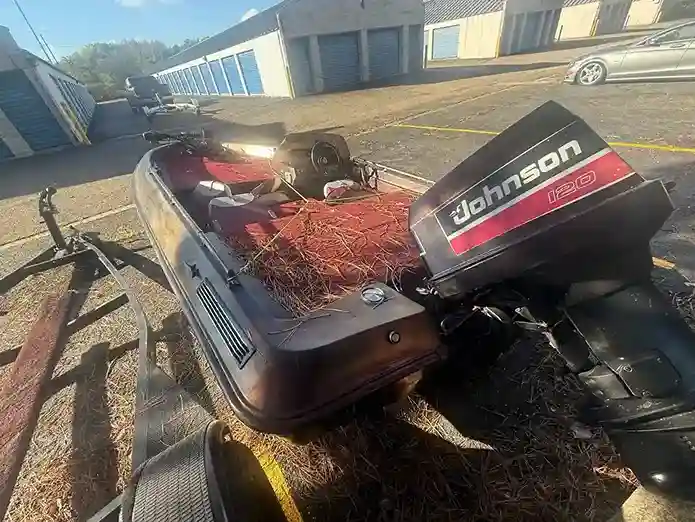
Not every boat is worth donating or selling — many aren’t even worth the effort of listing. Fiberglass hulls with osmotic blistering, rotted stringers, or mold throughout the cabin have no realistic resale path. Junk boat removal in Auburn exists precisely for these situations.
The key distinction: a junk removal service handles the entire process, including disposal, rather than simply picking up a vessel for resale. Owners shouldn’t have to pay twice — once for removal and once for disposal — so it’s worth confirming upfront what the service covers end-to-end.
When to Make the Call
If your boat’s registration lapsed on June 30 and you have no realistic plan to use it this season, the calculus is straightforward. Renewal costs money. Storage costs money. And under HB 2199, continued inaction carries legal risk that didn’t exist two years ago.
Environmentally responsible boat disposal in Washington means getting ahead of the state — not waiting for a derelict vessel notice to arrive. July is the natural window to act, and in Auburn, the resources to do it properly are available.
The longer a vessel sits unregistered, the fewer options you have. The first weeks of July offer the clearest on-ramp to handling this cleanly, legally, and without unnecessary cost.