

Why Alafaya Boat Owners Can’t Wait
Alafaya’s proximity to East Lake Tohopekaliga and Lake Underhill makes it a genuine boating community — and that means a fair number of aging, damaged, or long-unused boats sitting on private property or tied up in local waterways. For years, enforcement around derelict vessels was slow and inconsistent. That changed on July 1, 2025.
Florida Senate Bill 164, signed June 19, 2025, gave the Florida Fish and Wildlife Conservation Commission (FWC) sharper teeth. At the start of 2025, the state had already recorded over 1,000 abandoned vessels statewide, and cleanup costs had surpassed $9 million for the year. The legislature responded by creating a fast-track enforcement structure that directly affects boat owners in Orange County.
What the Three-Citation Rule Actually Means
Under SB 164, a vessel owner who receives three citations within a 24-month period for a derelict or neglected boat can have that vessel officially declared a public nuisance. That designation isn’t just a label — it gives authorities the right to remove the vessel and bill the owner for all associated costs.
Repeat offenders also face felony charges, a significant escalation from the misdemeanor-level consequences that existed before. The law closes a gap that allowed some owners to repeatedly ignore violations with minimal financial pain.
Even a first citation comes with fines. The point of the new structure is to make inaction more expensive than removal — quickly.
How Abandoned Boat Removal in Alafaya Works
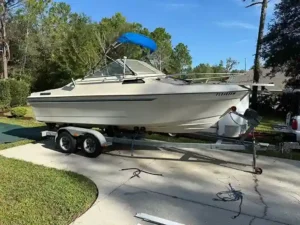
If you have an old boat on your property or moored in a local waterway, professional boat removal in Alafaya, FL is typically the most straightforward path forward. Here’s what the process generally looks like:
- Assessment: A removal crew evaluates the vessel’s size, location, and condition — whether it’s on a trailer in your yard, partially submerged, or sitting on a lakeshore.
- Access logistics: Alafaya properties vary considerably. Some require cranes or specialized trailers; others allow standard hauling. Crew experience with Orange County access points matters here.
- Documentation: Reputable services handle title verification or coordinate with the county if ownership documentation is incomplete. If you’re dealing with a boat you didn’t purchase, resources on boat disposal without a title can clarify your options.
- Disposal: Most boats removed through professional services are either recycled or properly scrapped — fiberglass, metals, and fluids handled according to Florida environmental standards.
The entire process for a straightforward removal can sometimes be completed within a few days of first contact, which matters when you’re working against a citation deadline.
Local Disposal and Environmental Considerations
Florida’s waterways are regulated environments. Boats left in or near lakes like Lake Underhill don’t just create legal problems — they can leak fuel, oil, and other fluids that damage the ecosystem and trigger environmental enforcement actions separate from the FWC citation process.
Responsible boat disposal includes handling those hazardous materials correctly. When you hire a professional service, that liability transfers to them. When you ignore the problem, it stays entirely with you.
When to Call for Help
The short answer: before you receive any citation at all. Once enforcement begins, your timeline shrinks and your options become more expensive.
If you have a vessel that’s been sitting unused for more than a season, shows visible deterioration, or is moored somewhere you no longer have consistent access to, those are all early warning signs. FWC and local marine patrols have become more active in Orange County waters since the law took effect.
For junk boat removal, the cost of professional hauling is almost always less than the cumulative cost of fines, forced government removal, and potential legal fees if citations escalate. Owners dealing with boats that were left on their property by someone else should also review guidance on how to remove an abandoned boat from your property — the law distinguishes between owners and victims, and that distinction matters for how you proceed.
SB 164 made neglect costly in Florida. In Alafaya, with active water access and increasing enforcement, acting now is simply the practical choice.
