
Why Apopka Boat Owners Need to Act Right Now
Florida’s Senate Bill 164 became law on July 1, 2025. It’s not a proposal or a pending rule — it’s already in effect, and the Florida Fish and Wildlife Conservation Commission (FWC) is actively enforcing it statewide.
Apopka sits directly on Lake Apopka, one of Orange County’s most-watched waterways, and has access to Lake Beauclair through the Lake Apopka North Shore. Both lakes see regular FWC patrol activity. Any vessel that’s taking on water, listing, unregistered, or clearly neglected is now a liability under the new law.
The numbers back up the urgency. FWC reported more than 1,000 derelict vessels statewide at the start of 2025 and spent over $9 million on removals that year — with the backlog still growing. Enforcement pressure is only increasing.
What SB 164 Actually Changes
The previous framework required FWC to work through a slower process before removing a vessel. SB 164 tightens that significantly.
Under the new law, a vessel can be declared a public nuisance after just three citations within a 24-month period. Once that designation sticks, FWC can move to remove the boat without waiting for owner compliance. More seriously, repeat violations can escalate from civil penalties to felony criminal charges.
The law also broadens what qualifies as an “at-risk” vessel — meaning a boat doesn’t have to be fully sunk or abandoned to draw enforcement attention. A vessel that’s partially submerged, leaking fuel, blocking navigation, or sitting without valid registration can trigger the citation process.
Hurricane Season Makes This More Urgent
The 2025 Atlantic hurricane season runs June through November, and Florida is already deep into it. Last year, storms Milton and Helene displaced hundreds of vessels across the state, creating new derelict cases almost overnight.
A boat that’s poorly secured or already in declining condition on Lake Apopka could be moved, sunk, or damaged in a single storm event — turning a manageable situation into an enforcement problem with criminal exposure. Getting ahead of storm season is one of the strongest reasons to address a troubled vessel now rather than after the damage is done.
What Removal Actually Looks Like
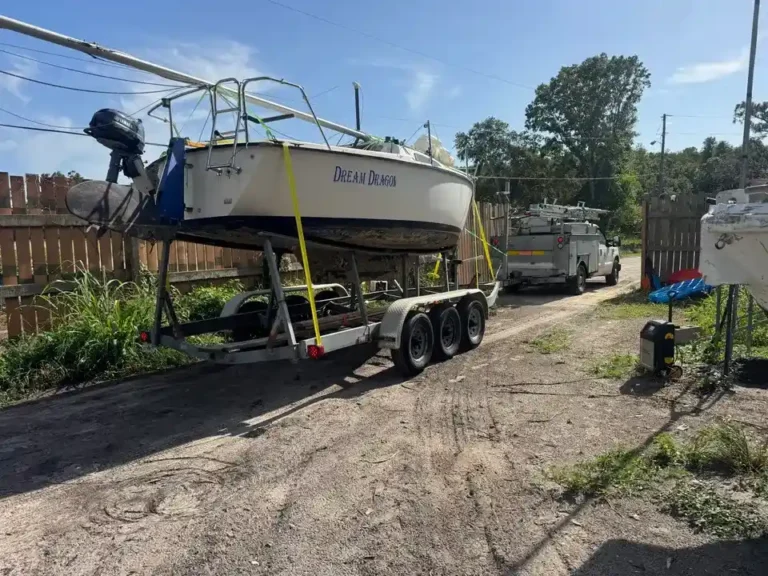
One concern that keeps boat owners from acting is not knowing what the process involves. Boat removal in Apopka, FL typically starts with an on-site assessment — a professional team evaluates the vessel’s condition, location, and the access available from the shoreline or dock.
From there, the crew handles the haul-out using the appropriate equipment for the vessel’s size and waterway. Lake Apopka’s shallow sections and the restoration zones along the North Shore can affect access routes, which is why local experience matters. A team unfamiliar with the lake’s conditions can run into complications that delay the job or damage the vessel further.
After removal, boat removal and disposal in Florida follows state environmental guidelines. Fiberglass hulls, fluids, batteries, and fuel systems all require handling under specific rules. A licensed disposal provider manages that process so the owner isn’t exposed to additional liability for improper disposal.
Local Disposal and Access Considerations
Lake Apopka has unique characteristics that affect removal logistics. The lake is part of an ongoing environmental restoration effort, and certain shoreline areas have restricted access or protected vegetation. Knowing which launch points and routes are viable — and which are off-limits — is something a professional boat disposal service in Apopka will already have sorted out.
Owners with vessels docked at private property along the lake should also verify whether their dock access allows for the equipment needed. Some removal jobs require cranes or large trailers that need adequate clearance from the road to the water.
When to Call a Professional
If your vessel on Lake Apopka or Lake Beauclair is unregistered, damaged, taking on water, or hasn’t moved in months, the window to act on your own terms is narrowing. Once FWC issues the first citation, the clock starts on that 24-month window toward a public nuisance declaration.
Professional boat removal services in Florida handle this process regularly. They know how to coordinate with state and local agencies, manage waterway-specific logistics, and complete disposal in compliance with Florida law — removing the owner from legal exposure quickly and cleanly.
The cost of proactive removal is almost always lower than the cost of FWC-ordered removal, legal fees, or the penalties that come with a felony charge. If you’ve been putting it off, SB 164 just reset the stakes.