
Why This Problem Can’t Wait
Lake Houston saw historic flooding beginning July 4, 2025. For Atascocita residents on the western shore, that meant boats torn from lifts, swept into neighbors’ yards, and left partially submerged along the shoreline.
What makes this more than a headache is the legal clock. Under Texas law, a vessel left on private property without consent for just seven days can be classified as abandoned — and the liability falls on the owner, not the state. The Texas General Land Office has no dedicated funding to remove displaced boats, meaning the responsibility lands squarely on you.
There’s an environmental dimension too. The Texas Parks and Wildlife Department issued warnings in July 2025 about giant salvinia and other invasive aquatic species spreading across East Texas waterways, including Lake Houston. Derelict hulls sitting in or near the water can trap debris, harbor plant material, and accelerate the spread of invasive biologicals. That’s not a theoretical concern — it’s an active one right now.
What Boat Removal Actually Looks Like
Many owners assume removal is a simple haul-and-go process. The reality depends on the vessel’s condition, location, and how the water affected it.
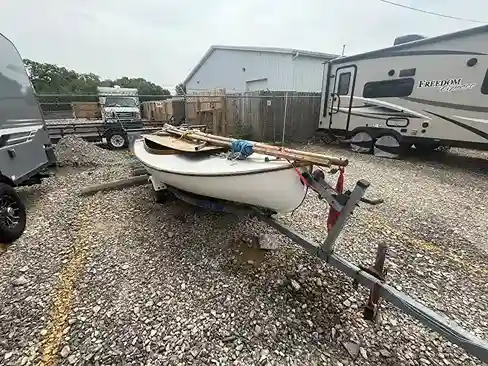
A flood-damaged boat may have a compromised hull, waterlogged engine compartments, or structural issues that make it unsafe to trailer in the traditional sense. Professional boat removal in Atascocita, TX services bring the right equipment — heavy-duty trailers, rigging, and sometimes cranes for partially submerged vessels — to handle these conditions without causing additional damage to your property or a neighbor’s.
Before anything moves, a reputable service will assess the boat’s condition, check for fuel or fluid leaks that require containment, and confirm access routes. If the vessel is sitting in a backyard or wedged against a dock, that access planning matters a lot.
Disposal and What Happens After
Once the boat is removed, it has to go somewhere. For flood-damaged vessels, the economics of repair rarely make sense — a boat that’s taken on water, suffered hull stress, and sat in debris-filled floodwater is often a total loss.
Environmentally responsible boat disposal in Texas involves draining and containing any remaining fuel, oil, or coolant before transport. Fiberglass hulls can be processed through recycling programs, and metal components are typically salvaged. This isn’t just the ethical approach — improper disposal of marine fluids is a violation of Texas environmental regulations and can carry real penalties.
If your boat still has a title, you’ll need to transfer or surrender it through TxDMV as part of the disposal process. A qualified junk boat removal service can walk you through the paperwork side, which is easy to overlook when you’re already dealing with flood recovery stress.
Access Challenges Specific to Lake Houston
Atascocita’s layout creates some specific logistical challenges. Many properties back directly to the water with limited side-yard clearance, and post-flood conditions can leave soft, saturated ground that makes heavy equipment tricky to position.
If your boat ended up on a neighbor’s property, communication matters early. Texas’s seven-day abandonment rule means the property owner where the vessel sits has limited time before they can initiate their own removal process — and charge you for it. Getting ahead of that conversation protects everyone.
Neighborhood deed restrictions in some Atascocita communities also govern what can sit in driveways or on lawns, so a damaged boat parked temporarily can create secondary compliance issues during what’s already a stressful recovery period.
When to Call for Help
If the boat is still in the water, partially submerged, or sitting on property that isn’t yours, call a professional immediately. This isn’t the scenario for a DIY trailer job.
For boats sitting on your own property in accessible condition, you may have a bit more flexibility — but the legal and environmental urgency still applies. The longer a flood-damaged hull sits, the more it deteriorates, and the harder (and more expensive) it becomes to move.
Flood recovery is hard enough without a damaged vessel compounding the problem. Acting quickly on boat disposal in Atascocita protects your property, your neighbors, and a lake that thousands of families depend on every year.