
Why Atlanta Boat Owners Face Pressure Right Now
Summer 2026 is shaping up to be one of Lake Lanier’s most heavily enforced boating seasons in recent memory. A new no-wake zone took effect in April 2025, and the Hall County Sheriff’s Marine Patrol has expanded its presence on the water. Regulatory attention on the lake is at a high point.
At the same time, Georgia operates on a 3-year boat registration cycle. A large cohort of owners who last renewed in 2023 are now facing a straightforward decision: renew or dispose. For owners of aging, damaged, or unused vessels, that renewal deadline is the nudge that turns “I’ll deal with it later” into an urgent problem.
If you’re in that position, understanding Georgia’s legal framework before you act could save you from significant fines — and real headaches.
What Georgia Law Actually Says
Georgia’s abandoned vessel statutes, found at O.C.G.A. § 52-7-70 through § 52-7-77, are specific and unambiguous. A few points every Atlanta boat owner must understand:
- 15-day DNR notification requirement: If you abandon or dispose of a vessel, you must notify the Georgia Department of Natural Resources within 15 days. Missing this window creates legal exposure.
- No finders-keepers rule: Private individuals cannot claim an abandoned vessel as their own. If you find one and decide to keep it, you’re violating state law — period.
- Formal lien and foreclosure process: When an abandoned vessel is identified, the state follows a structured lien and potential foreclosure process. Owners can face costs associated with removal and storage if the state has to intervene.
Georgia does not have a formal amnesty or drop-off program for abandoned boats, unlike some other states. That means the burden falls entirely on the owner to handle disposal through proper channels before a vessel becomes a legal liability.
What Removal Actually Looks Like
For most Atlanta-area owners, the practical question is: how does this actually work when you’re ready to get rid of a boat?
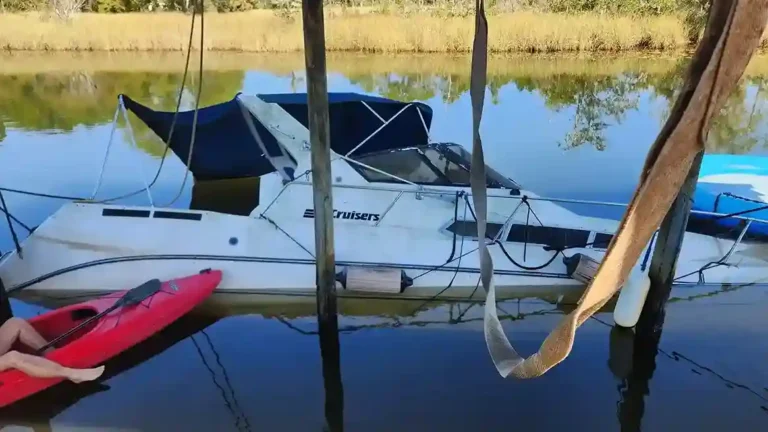
A professional boat removal in Atlanta, GA service will handle the heavy logistics — hauling the vessel from your property, marina, or storage facility. If the boat is still in the water at Lake Lanier or another nearby body of water, removal crews coordinate access with the marina or launch point and use appropriate equipment for in-water extraction.
Fiberglass hulls require specific handling. Responsible disposal means ensuring hazardous materials — fuel, oil, batteries, and coolant — are drained and processed correctly before the hull is broken down. Reputable removal companies follow Georgia EPD guidelines on hazardous waste handling, which is a core part of what makes a service truly environmentally responsible boat disposal in Georgia.
Expect the process from initial contact to completed removal to take anywhere from a few days to two weeks, depending on boat size, location access, and scheduling.
Lake Lanier and Local Access Considerations
Lake Lanier presents its own logistical challenges. The lake spans parts of Hall, Forsyth, Dawson, and Gwinnett counties, and access points vary widely. Some marinas have strict staging requirements for vessel removal. If your boat is at a slip, expect to coordinate between the removal company and the marina operator — and check whether any outstanding dock fees must be cleared before the boat can be moved.
With the new enforcement zones active, leaving an unregistered or non-operational vessel at a Lanier marina is a faster path to a formal complaint or citation than it was even two years ago. Don’t assume inaction is a safe option.
When to Call a Professional
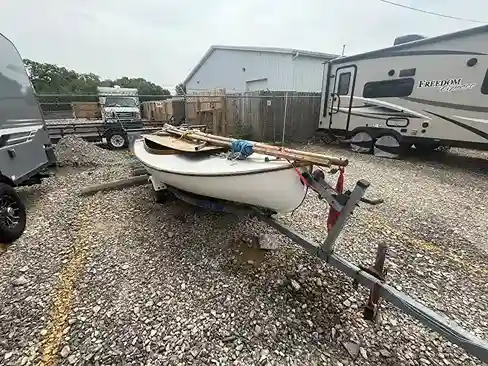
If your boat hasn’t moved in over a year, is unregistered, or is sitting in a location where it could be classified as abandoned under Georgia law, the time to act is now — not after a citation arrives.
A qualified junk boat removal Atlanta provider can assess the situation, handle the physical removal, and provide documentation confirming proper disposal. That paper trail matters if the DNR ever has questions about the vessel’s status.
Georgia’s rules leave little room for ambiguity. Owners who understand the law and move proactively protect themselves from enforcement actions, storage liens, and environmental liability. Those who don’t move fast enough often end up paying far more than the cost of a straightforward removal — in fees, fines, and frustration.