
Why This Matters More Than You Think
Jefferson County gets hit. That’s not speculation — it’s history. Tropical Storm Imelda dropped over 40 inches of rain on parts of Southeast Texas in 2019. Hurricane Harvey in 2017 caused catastrophic flooding across the region. And as of June 16, 2026, the City of Beaumont’s Emergency Operations Center was actively monitoring severe weather with Flood and Tropical Storm Watches already issued for the county.
Peak storm season runs August through October. That window is not far off, and it arrives fast.
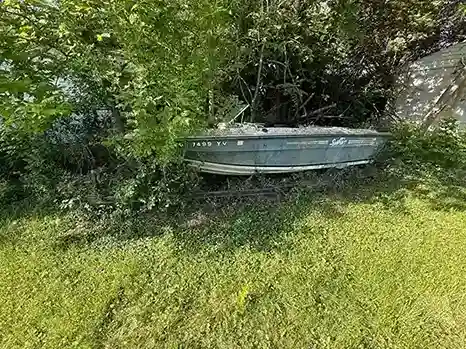
An old boat you’ve been meaning to deal with becomes a drastically different problem after a storm. Floodwater moves vessels. It pins them against structures, sinks them into mud, or carries them into public waterways. What was a straightforward boat removal in Beaumont, TX becomes a complex, expensive salvage operation.
The Real Cost of Waiting
Texas General Land Office data puts the cost of removing an abandoned vessel from coastal waters at roughly $1,000 per foot. A 22-foot boat that could have been hauled away for a fraction of that becomes a $22,000 problem once it’s submerged or storm-displaced.
Under the Texas Oil Spill Prevention and Response Act, the primary removal responsibility falls on the vessel owner or the moorage facility operator — not the city, not the county, not TGLO. If your boat leaks fuel or fluids during a storm event, liability follows the title.
Delay isn’t neutral. Every week closer to peak hurricane season is a week the window for straightforward removal gets smaller.
What Boat Removal Actually Involves Here
Beaumont’s geography shapes how removal works. Access routes around the Neches River, canals, and low-lying neighborhoods near Tyrrell Park or along Highway 105 can become impassable quickly during weather events. Crews need dry ground, trailers need clearance, and cranes or forklifts need space to operate safely.
For a vessel on a trailer in a residential yard, removal is usually straightforward — a tow truck or flatbed handles it. A boat sitting in a slip at a marina near the Port of Beaumont requires coordination with the harbormaster and sometimes additional permits depending on vessel condition. A boat partially sunk or storm-grounded is an entirely different category requiring specialized salvage equipment.
Old boat removal in Beaumont typically involves draining fluids before transport, which is both an environmental requirement and a practical necessity. Fuel, oil, and bilge water can’t be left to spill during haul-out.
Disposal Options and What Happens Next
Boat disposal services in Beaumont generally route vessels one of three directions: scrapping and recycling at a metals yard, deconstruction for salvageable parts, or transfer to a registered disposal facility. Fiberglass hulls require specific handling since they can’t simply be buried in a standard landfill.
If your vessel still has a title and is in reasonable condition, some removal companies will coordinate donation or resale, which can offset removal costs. If it’s truly end-of-life — rotting transom, cracked hull, seized engine — scrap is typically the practical route.
Abandoned boat removal in Beaumont operates under both Texas Parks and Wildlife regulations and local ordinances. If the vessel has been sitting untouched long enough that it’s technically “abandoned” under state law, there are specific notification steps required before anyone can legally move it — even you, if a title transfer is involved.
When to Make the Call
If your boat fits any of these descriptions, now is the right time to contact a removal service:
- It hasn’t been in the water in over a year
- It’s unregistered or the title is unclear
- It’s storing water, showing hull damage, or leaking fluids
- It’s sitting on a trailer with flat tires or a rotting frame
- A marina or storage facility has given you a removal deadline
Southeast Texas doesn’t offer much warning once a storm system accelerates in the Gulf. Removal crews book up fast when watches turn to warnings, and post-storm removal queues can stretch weeks out.
Getting ahead of it now, before August, is the practical choice. The cost of removal before a storm is almost always significantly less than what comes after one.